Materiaalit
A guide to materials with less plastic – what should you look for?
Published 4.10.20263 min read
Wood, glass, metal and natural fibres are familiar alternatives to many plastic products. Find out what to consider when choosing materials, and why intended use, durability and ease of care matter.
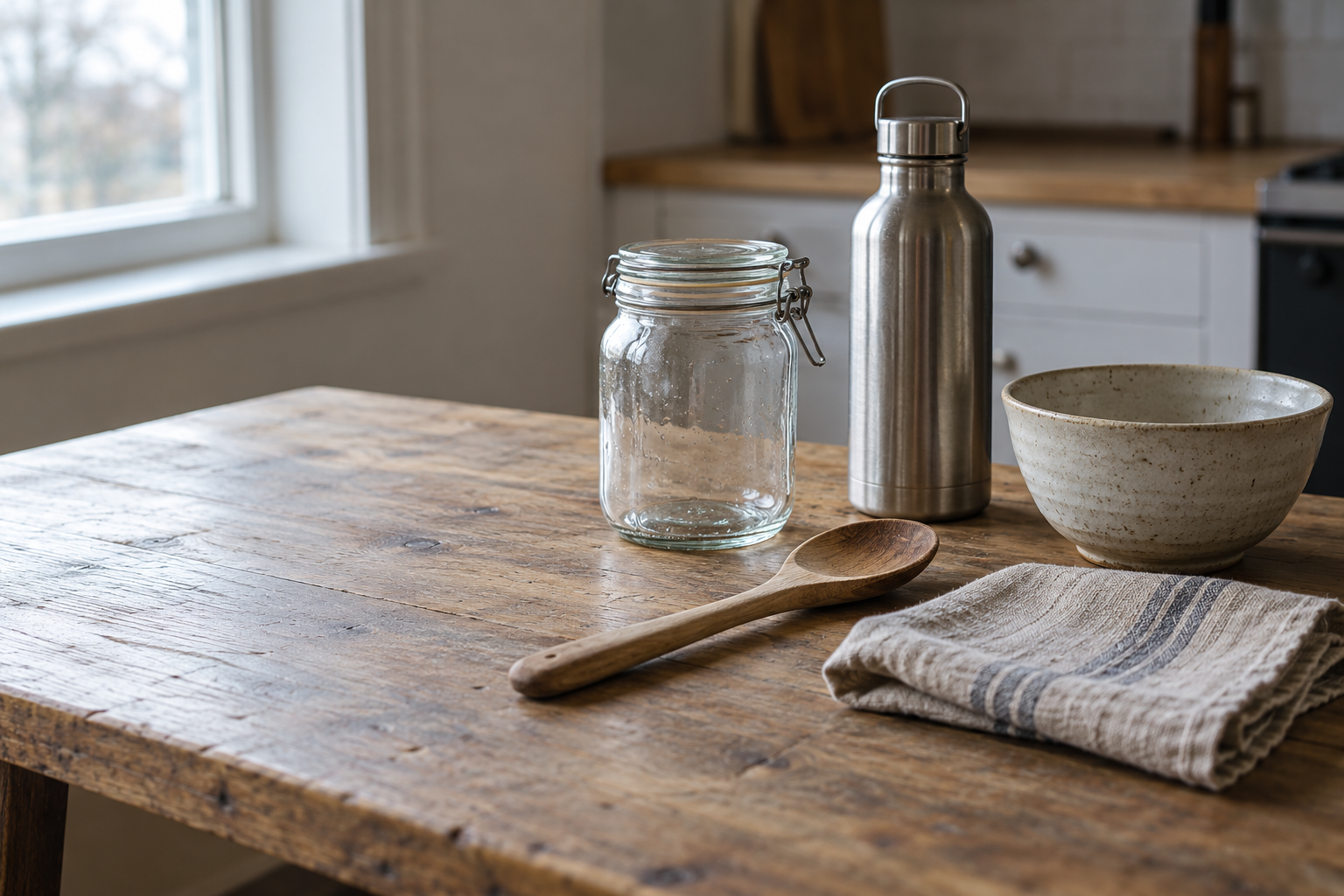
When you’re looking for an option with less plastic, the material’s name alone won’t tell you whether a product is right for you. Its lifespan, how it’s made, how to care for it and whether you’ll actually use it also matter. Often, the best option is one that lasts and that you know how to sort for disposal or recycle correctly at the end of its life.
Wood and bamboo
Wood and bamboo are common materials in kitchen utensils, brushes and storage solutions. Check how to care for the product and whether it can be washed with water or in the dishwasher. Bamboo doesn’t automatically mean the whole product is plastic-free: coatings, glues, handles or bristles, for example, may contain other materials.
Glass
Glass works well for many storage containers and bottles. It’s easy to clean, but it can be heavy and breakable. Before use, check whether the container can withstand heat, freezing or dishwashing. Always follow the product’s own instructions.
Stainless steel and aluminium
Metal is a common alternative for drinking bottles, containers and kitchen utensils. A product’s weight, construction and repairability affect how practical it is. Check that it’s suitable for its intended use, such as food storage or washing in the dishwasher.
Natural fibres
Cotton, linen, wool and jute are examples of natural fibres used in items such as bags, towels and brushes. Durability depends not only on the fibre, but also on the product’s construction, stitching and how it’s washed. Choose a washable product only if it suits your needs and care routine.
Ceramic materials
Ceramics are used in tableware, soap dishes and storage solutions. They’re often heavy and can break if dropped, so they aren’t suitable for every use. Check the product’s use and washing instructions.
Pay attention to coatings and every part of the product
A product may look as though it’s made from a single material even when it contains several. The handle, coating, seal, glue or decorations may contain plastic or other materials. If you’re looking for a completely plastic-free product, check the product information and ask the seller if you need more details.
Let your needs guide your choice
Before buying, think about what you’ll use the product for, how often you’ll need it and how to care for it. Extending the life of something you already own may make more sense than buying something new. If you do buy new, choose a durable, repairable option that suits your needs.
Sort the product and its packaging separately
The packaging and the product itself may belong in different waste collections. Plastic packaging collection is for household plastic packaging, not for all plastic items. Check your local waste management guidelines to find out how to sort both the product and its packaging.
Material choice is part of the bigger picture
No single material automatically makes a product the best choice. Think about the product throughout its life: will it stand up to everyday use, can you maintain it and do you really need it? These questions can help you find an option that works for your home.